Showing posts with label adult. Show all posts

Monday, March 9, 2015

Review: A Path Appears by Nicholas D. Kristof and Sheryl WuDunn

A Path Appears: Transforming Lives, Creating OpportunityA Path Appears--Nicholas D. Kristof and Sheryl WuDunn
September 2014 by Knopf
400 pages--Goodreads

An essential, galvanizing narrative about making a difference here and abroad—a road map to becoming the most effective global citizens we can be.

In their number one New York Times best seller Half the Sky, husband-and-wife team Nicholas D. Kristof and Sheryl WuDunn brought to light struggles faced by women and girls around the globe, and showcased individuals and institu­tions working to address oppression and expand opportunity. A Path Appears is even more ambi­tious in scale: nothing less than a sweeping tap­estry of people who are making the world a better place and a guide to the ways that we can do the same—whether with a donation of $5 or $5 mil­lion, with our time, by capitalizing on our skills as individuals, or by using the resources of our businesses.

With scrupulous research and on-the-ground reporting, the authors assay the art and science of giving, identify successful local and global initia­tives, and share astonishing stories from the front lines of social progress. We see the compelling, in­spiring truth of how real people have changed the world, upending the idea that one person can’t make a difference.

We meet people like Dr. Gary Slutkin, who devel­oped his landmark Cure Violence program to combat inner-city conflicts in the United States by applying principles of epidemiology; Lester Strong, who left a career as a high-powered television anchor to run an organization bringing in older Americans to tu­tor students in public schools across the country; MIT development economist Esther Duflo, whose pioneering studies of aid effectiveness have revealed new truths about, among other things, the power of hope; and Jessica Posner and Kennedy Odede, who are transforming Kenya’s most notorious slum by ex­panding educational opportunities for girls.

A Path Appears offers practical, results-driven advice on how best each of us can give and reveals the lasting benefits we gain in return. Kristof and WuDunn know better than most how many urgent challenges communities around the world face to­day. Here they offer a timely beacon of hope for our collective future.


This book is ambitious.  I don't know that I've seen such a wide scope in a single book before.  In general, A Path Appears is about increasing opportunity, both domestically and internationally.  More specifically, it covers education, crime, poverty, malnutrition, gang violence, addiction, sex trafficking, early childhood intervention, prenatal care, family planning, agriculture, mentoring, literacy, charity, business, advocacy, human psychology, metrics, investments, marketing, and pretty much everything else under the sun that can be linked to aid work.  Kristof and WuDunn take a strategic, research based approach to determining the efficacy of aid groups and evaluating which groups make the most impact per dollar.

The book is peppered with suggestions for how you can get involved in making a difference.  If you take anything from this book it is the idea that ordinary people, not just millionaires, can make a significant difference in the world by making smart aid decisions.  Pick a cause, and the book probably describes a group that addresses that cause.

I was disappointed that the book didn't spend more time on sex trafficking or domestic violence. The accompanying PBS documentary dedicated an episode each to those two issues, and they are super important.  Sex trafficking in particular doesn't get the kind of attention it needs.  Looking at that decision from further back however, it makes a bit of sense.  A documentary on sex trafficking will pull in more attention and funding than one on micro nutrients and efficacy metrics.  And a chunk of people who watch the documentary will go off and immediately start reading the book (me), so I suppose it was an effective marketing strategy.

This book is important, yes, but it is also compelling.  Kristof and WuDunn are excellent story tellers.  They make you care about each and every one of the people they highlight and the many dozens of causes those people support.  They manage to capture the magnitude of these problems without making you feel helpless.  Rather leaving you drowning in a sea of unfillable need, they empower you with tools to do good.  A Path Appears is a must read for anyone who wants to make a positive difference in the world, whether in your own neighborhood or on the other side of the world.  And if you haven't read their earlier book, Half the Sky, do that right now.

Friday, November 29, 2013

Review: Ironskin by Tina Connolly

Ironskin--Tina Connolly
October 2012 by Tor Books
304 pages--Goodreads

Jane Eliot wears an iron mask.

It’s the only way to contain the fey curse that scars her cheek. The Great War is five years gone, but its scattered victims remain—the ironskin.

When a carefully worded listing appears for a governess to assist with a "delicate situation"—a child born during the Great War—Jane is certain the child is fey-cursed, and that she can help.

Teaching the unruly Dorie to suppress her curse is hard enough; she certainly didn’t expect to fall for the girl’s father, the enigmatic artist Edward Rochart. But her blossoming crush is stifled by her own scars, and by his parade of women. Ugly women, who enter his closed studio...and come out as beautiful as the fey.

Jane knows Rochart cannot love her, just as she knows that she must wear iron for the rest of her life. But what if neither of these things is true? Step by step Jane unlocks the secrets of her new life—and discovers just how far she will go to become whole again.


A steampunk fey reimagining of Jane Eyre, Ironskin worked so well until it didn't.  

The first two thirds of the book were great.  It was an adaptation like Cinder, where the base story was important to the plot without being a crutch; Connolly had her own story to tell.  She fundamentally changed Jane by giving her a loving childhood, but it worked for the story, especially with her rage curse.  Helen was too greedy* to deserve her name, but I could cope with it.  I liked how Adelle/Dorie's story was progressing as she developed her fey powers.  Grace Poole got a new and interesting back story. The only thing that really needed improvement was the development of the Jane/Rochart romance.

Then everything fell apart.  As we approached the climax, Jane and the other characters started doing things that didn't make any sense, didn't develop the plot, didn't heighten the suspense, and that were included only because Connolly was crutching on the original plot.  Why did Jane suddenly go back to the city during the siege?  Nothing was accomplished that couldn't have been done back at the estate.  The only way it made a particle of sense was to see it as a shoddy adaptation of Jane's post failed-wedding flight.  And things just got worse with the faces and the fey queen and demonic possession.  

After a strong start, Ironskin was a disappointment.  I'll just go watch this episode of The Autobiography of Jane Eyre instead.


*In an earlier draft I accidentally typed "Helen was too groovy."  Now I need a disco adaptation of Jane Eyre.

Sunday, October 6, 2013

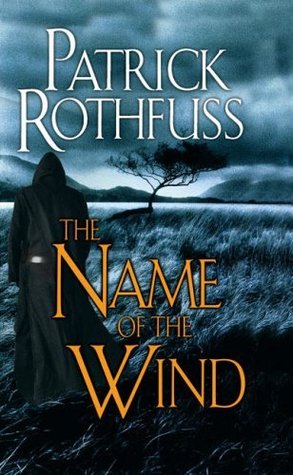
Review: The Name of the Wind by Patrick Rothfuss

The Name of the Wind--Patrick Rothfuss
March 2007 by DAW Hardcover
662 pages--Goodreads

Told in Kvothe's own voice, this is the tale of the magically gifted young man who grows to be the most notorious wizard his world has ever seen. The intimate narrative of his childhood in a troupe of traveling players, his years spent as a near-feral orphan in a crime-ridden city, his daringly brazen yet successful bid to enter a legendary school of magic, and his life as a fugitive after the murder of a king form a gripping coming-of-age story unrivaled in recent literature. A high-action story written with a poet's hand, The Name of the Wind is a masterpiece that will transport readers into the body and mind of a wizard.


The Name of the Wind was fine, but not amazing.  It has a nontraditional premise, and I congratulate Rothfuss for pulling it off.  I mean, how many authors could write a trilogy where the main character sits in an in and tells the story of his life for three days straight.  And that's it.  And the publishers buy it and readers give it some of the highest ratings I've ever seen on Goodreads.  

One of my biggest problems with the novel is Kvothe's obsession with Denna.  She's just dull.  If she wasn't such a big part of the book I could ignore her, but Kvothe keeps mooning over her and it gets very boring.  Seriously, Kvothe; stop moping about your crush and go learn magic.  Denna did show some more depth near the end of the novel, so maybe there's hope for book two.  I don't need her to be a great or even a good person, but I need her to be a real person with goals and motivations.  For now she's just a pretty face.  

It's a very slow burning novel.  Not boring, but not terribly exciting either.  I liked Kvothe's time in the forest and the city.  And I want to see more of the female loanshark.  She's a much more interesting character than Denna.  Why can't we spend more time with her?

So, it's good, but not the best book I've ever read.  I will get around to reading book two eventually, but I don't feel a driving need to finish the series now.  Especially since book three isn't out.

Sunday, August 11, 2013

Mini Review: Sweetly by Jackson Pearce

Sweetly--Jackson Pearce
August 2011 by Little, Brown Books for Young Readers
310 pages--Goodreads

As a child, Gretchen's twin sister was taken by a witch in the woods. Ever since, Gretchen and her brother, Ansel, have felt the long branches of the witch's forest threatening to make them disappear, too.

Years later, when their stepmother casts Gretchen and Ansel out, they find themselves in sleepy Live Oak, South Carolina. They're invited to stay with Sophia Kelly, a beautiful candy maker who molds sugary magic: coveted treats that create confidence, bravery, and passion.

Life seems idyllic and Gretchen and Ansel gradually forget their haunted past -- until Gretchen meets handsome local outcast Samuel. He tells her the witch isn't gone -- it's lurking in the forest, preying on girls every year after Live Oak's infamous chocolate festival, and looking to make Gretchen its next victim. Gretchen is determined to stop running and start fighting back. Yet the further she investigates the mystery of what the witch is and how it chooses its victims, the more she wonders who the real monster is.

Gretchen is certain of only one thing: a monster is coming, and it will never go away hungry.


Sweetly is a slow paced novel, but it drew me in and wouldn't let me go, so I finished it in two days.  It's a compelling read. Each of the characters has depth, but I particularly like Gretchen's development.  The angle Pearce takes on the villain is also interesting.  Not something I expected, but something I'm still thinking about.  I like Pearce's writing.  She keeps that slowly growing unease feeling going the whole time and some parts just sent chills up my spine, particularly the prologue.  And so many different kinds of chocolate described in such detail I could practically taste them.

Sweetly is by no means flawless.  The Samuel romance thing felt a bit unnecessary, and how did Gretchen become such a marksman over the course of a week?  But I'm willing to forgive those things for the rest of the book.  And the cover is so wonderfully creepy.  I will definitely have to read Sisters Red and Fathomless (which happens to be on sale this month for Kindles).

Sunday, May 19, 2013

Review: The Emperor's Soul by Brandon Sanderson

The Emperor's Soul--Brandon Sanderson
October 2012 by Tachyon Publications
175 pages--Goodreads

Shai is a Forger, a foreigner who can flawlessly copy and re-create any item by rewriting its history with skillful magic. Condemned to death after trying to steal the emperor’s scepter, she is given one opportunity to save herself. Though her skill as a Forger is considered an abomination by her captors, Shai will attempt to create a new soul for the emperor, who is almost dead.

Probing deeply into his life, she discovers Emperor Ashravan’s truest nature—and the opportunity to exploit it. Her only possible ally is one who is truly loyal to the emperor, but councilor Gaotona must overcome his prejudices to understand that Shai’s forgery is as much artistry as it is deception.

Brimming with magic and political intrigue, this deftly woven fantasy delves into the essence of a living spirit.


The Emperor's Soul is Sanderson's usual storytelling, but condensed; rather than juggling three or four intertwined plots and dozens of characters we have one main character, one plot arc.  The story is straight forward, but not oversimplified.  From the intriguing beginning to the satisfying conclusion, we experience all of Sanderson's skill and style.

We once again get an excellently crafted magic system.  Soulstamping, like all of Sanderson's magic systems, has rules and limitations that make sense and pose challenges.  Shai is limited in what and how she can forge.  Sanderson never has his characters wave a magic wand to fix everything inexplicably.  It is much more satisfying when a character has to be creative to work around the limitations in order to find a solution, rather than just poofing everything to perfection.

And the characters are excellent, as always.  They are real.  Even with the limited amount of time we have to work with in this novella, Shai, Gatona, and the other characters are real, not one dimensional caricatures.  They each have motivations, desires, personalities, histories.  No one is evil just for the sake of being evil, and no one is angelically good.  Everyone has a purpose to what they do.  That skill in characterization is what keep me coming back for more.

My only regret is that The Emperor's Soul isn't loner.  Sanderson didn't cut the story short or leave dangling plot strings or anything like that.  Everything wraps up well and the story is just as long as it needs to be.  I just want more.  I enjoy Sanderson's storytelling so much, that only getting 200 pages leaves me wanting more.  I'll just have to go reread Mistborn.

Friday, November 9, 2012

Review: Lord of the Flies by William Golding

Lord of the Flies--William Golding
Originally published in 1954
182 pages--Goodreads

William Golding's classic tale about a group of English schoolboys who are plane-wrecked on a deserted island is just as chilling and relevant today as when it was first published in 1954.

At first, the stranded boys cooperate, attempting to gather food, make shelters, and maintain signal fires. Overseeing their efforts are Ralph, "the boy with fair hair," and Piggy, Ralph's chubby, wisdom-dispensing sidekick whose thick spectacles come in handy for lighting fires. Although Ralph tries to impose order and delegate responsibility, there are many in their number who would rather swim, play, or hunt the island's wild pig population. Soon Ralph's rules are being ignored or challenged outright. His fiercest antagonist is Jack, the redheaded leader of the pig hunters, who manages to lure away many of the boys to join his band of painted savages. The situation deteriorates as the trappings of civilization continue to fall away, until Ralph discovers that instead of being hunters, he and Piggy have become the hunted: "He forgot his words, his hunger and thirst, and became fear; hopeless fear on flying feet." Golding's gripping novel explores the boundary between human reason and animal instinct, all on the brutal playing field of adolescent competition.


I'm not entirely sure how I missed reading this book in high school since it is so often on the required text list.  Because it is a widely read book and it was published over 50 years ago, I will include spoilers.  If that bothers you, beware. 

Golding takes the Robinson Crusoe shipwrecked adventure story and turns it from a triumph to the human spirit to the decay of man's violent nature.  Disturbing?  Yes.  It's about the descent into savagery; I don't think that could be properly conveyed without some element of the disturbing. 

The slow breakdown of Golding's mini-society is excellently crafted.  It is incredibly creepy because it is so believable.  It's not just that the boys kill Simon in their primal dance, but that I can actually see this happening with a group of boys left all on their own.  I can see things getting out of hand and going irrevocably too far.  The book is a mirror to society, reflecting tendencies we see in people around us and in ourselves.

Golding meant for this to be an allegorical novel to analyze the breakdown from order to savagery.  He is not subtle, but his portrayals rarely feels overhanded.  Even though the characters have very specific and narrow roles (the intellectual, the savage, the leader, the prophet, the masses), they still have depth. They don't really have breadth, but within their roles they are deeply developed.  I also liked the depiction of the ever present threat of the Beast--the fear of the unknown, the compelling drive to violence, the savagery in all of us, the label attached to the scapegoat to escape the fear of ourselves. 

I really liked the ending sentence, where the officer turns away from the warlike boy savages to stare at his cruiser, the tool of the adult war that underscores the whole story. It's a reminder that the book doesn't just deal with the possible in society, but with problems we already have.

There is a strong connection to Lost. The Island brings out the best and the worst in people.  The rule of law breaks down.  There is a "prophet" in tune with the Island.  And there are enough Beasts, smoke monsters, and Others to keep everyone on the edge.  The Maze Runner spends less time on the collapse society but is another depiction of the cruelty people are capable of when they are desperate.

I didn't enjoy Lord of the Flies as much as I would have liked to.  It made me think, but not as deeply as other books have.  I wish I'd had the opportunity to study this in a class, because I would have taken more time and thought with it if I had read a physical copy instead of the audiobook.  I'm glad I read it, but I won't feel the need to reread it for a while.  This book has made it on to a lot of the "Best Books of the Century" lists, and I think it deserves its place.  It is a rich text that provides a lot of food for discussion, both about Golding's literary craft and his commentary on society. 

Saturday, November 3, 2012

Review: Jane Austen Made Me Do It by Laurel Ann Nattress

Jane Austen Made Me Do It--Laurel Ann Nattress
October 2011 by Ballantine Books
464 pages--Goodreads

“My feelings will not be repressed. You must allow me to tell you how ardently I admire and love you.” If you just heaved a contented sigh at Mr. Darcy’s heartfelt words, then you, dear reader, are in good company. Here is a delightful collection of never-before-published stories inspired by Jane Austen—her novels, her life, her wit, her world.

In Lauren Willig’s “A Night at Northanger,” a young woman who doesn’t believe in ghosts meets a familiar specter at the infamous abbey; Jane Odiwe’s “Waiting” captures the exquisite uncertainty of Persuasion’s Wentworth and Anne as they await her family’s approval of their betrothal; Adriana Trigiani’s “Love and Best Wishes, Aunt Jane” imagines a modern-day Austen giving her niece advice upon her engagement; in Diana Birchall’s “Jane Austen’s Cat,” our beloved Jane tells her nieces “cat tales” based on her novels; Laurie Viera Rigler’s “Intolerable Stupidity” finds Mr. Darcy bringing charges against all the writers ofPride and Prejudice sequels, spin-offs, and retellings; in Janet Mullany’s “Jane Austen, Yeah, Yeah, Yeah!” a teacher at an all-girls school invokes the Beatles to help her students understand Sense and Sensibility; and in Jo Beverley’s “Jane and the Mistletoe Kiss,” a widow doesn’t believe she’ll have a second chance at love . . . until a Miss Austen suggests otherwise.

Regency or contemporary, romantic or fantastical, each of these marvelous stories reaffirms the incomparable influence of one of history’s most cherished authors.


I won this collection from one of Misty's giveaways during Austen in August over at The Book Rat (thanks again, Misty).  I thought it was a collection of essays by authors on how Jane Austen had influenced their lives and their writing, but it turned out to be a collection of Austen spin-offs, continuations, and retellings.  This was my first venture into the world of Austen spin-offs, and for the most part, I liked it.  I didn't enjoy the contemporary stories as much, but that is due just to personal taste; I am rarely interested in contemporary adult stories.  Most of the stories were a fun, new look at Austen's characters.

Writing a review on a collection of short stories is difficult.  I can't really talk about overarching plot, characters, or writing style without going into a long list of every story and how it worked, so I'll just touch on my favorites.  
--In "Jane Austen's Nightmare" by Syrie James, the main characters of each novel come to tell Austen that she portrayed them poorly.  It was fun to see Emma being a busybody, Elinor claiming she is too perfect, and Fanny complain that Austen made her boring.  
--"Nothing Less than Fairyland" by Monica Fairview is a continuation of Emma.  I had never considered Emma and Knightly's married life, but trying to live in the same house as Mr. Woodhouse would be maddening.  I thought Emma's characterization was just a bit off, but it was a good story.
--"Jane Austen and the Mistletoe Kiss" by Jo Beverley gives a widow a second chance at love.  Cute and short with a touch swoon-worthy Regency romance. 
--"What Would Austen Do" by Jane Ruino and Caitlen Rabino Bradway was a lot of fun, mostly due to the main character's voice.  A teenaged boy with an Austen-obsessed mother, he has just a touch of snark, some sarcasm, and the general teenaged 'all the adults in my life are insane' attitude.

Those who enjoy Austen spin-offs will enjoy this collection.  There's a wide variety of stories, from metafiction to mystery to contemporary romance to young adult to Regency romance to sequels to stories about Austen's family and more, so there's something in it for everyone.  

LinkWithin

Related Posts Plugin for WordPress, Blogger...