Showing posts with label books about books. Show all posts

Saturday, January 18, 2014

Review: Across a Star-Swept Sea by Diana Peterfreund

Across a Star-Swept Sea--Diana Peterfreund
October 2013 by Balzer +  Bray
464 pages--Goodreads

Centuries after wars nearly destroyed civilization, the two islands of New Pacifica stand alone, a terraformed paradise where even the Reduction—the devastating brain disorder that sparked the wars—is a distant memory. Yet on the isle of Galatea, an uprising against the ruling aristocrats has turned deadly. The revolutionaries’ weapon is a drug that damages their enemies’ brains, and the only hope is rescue by a mysterious spy known as the Wild Poppy.

On the neighboring island of Albion, no one suspects that the Wild Poppy is actually famously frivolous aristocrat Persis Blake. The teenager uses her shallow, socialite trappings to hide her true purpose: her gossipy flutternotes are encrypted plans, her pampered sea mink is genetically engineered for spying, and her well-publicized new romance with handsome Galatean medic Justen Helo… is her most dangerous mission ever.

Though Persis is falling for Justen, she can’t risk showing him her true self, especially once she learns he’s hiding far more than simply his disenchantment with his country’s revolution and his undeniable attraction to the silly socialite he’s pretending to love. His darkest secret could plunge both islands into a new dark age, and Persis realizes that when it comes to Justen Helo, she’s not only risking her heart, she’s risking the world she’s sworn to protect.

In this thrilling adventure inspired by The Scarlet Pimpernel, Diana Peterfreund creates an exquisitely rendered world where nothing is as it seems and two teens with very different pasts fight for a future only they dare to imagine.


I am so impressed by this novel.  After being a bit disappointed by For Darkness Shows the Stars, I was worried that Across a Star-Swept Sea would follow suit.  No worries!  It takes everything that For Darkness did right and builds on it.

First, the setting is perfect.  It's an excellent adaptation of the source material.  Peterfreund takes the class system of the first book and fits it to the framework of the French revolution.  The the reduction was cured a few centuries ago, but there is still class tension between the aristos and regs.  In Galatea those tensions erupt into a Reign of Terror with people being reduced rather than guillotined.  Fervor blinds the revolutionaries to the cruelty of their actions until they care only for revenge against the aristos and those who support them for all their crimes and their fathers' crimes and their fathers' fathers' crimes.  In Albion things are more stable, but those tensions still exist.  Some aristos are fair stewards; others are not.  And whispers of revolution from discontented regs threaten destabilize a regency government.

And the fact that Justen invented the reduction drug (albeit by accident) is a great adaptation of Marguerite's accidental betrayal in the original.  Basically, I just love good adaptations.  The ones that bring out the most important parts of the original and adapting those conflicts into a new setting.  The ones that stay true to the core of the characters while bringing out something new and interesting about them.

In that light, Persis is so annoying, and I mean that in the best possible way.  Her disguise requires her to act in a manner WAY below her intellect.  It drove me crazy how she had to hold back her complicated opinions about politics, gender relations, and social equality.  I hated every time Justen thought of her as a spoiled idiot.  It is so perfect for this story and the tension it needs.  I was a bit worried about this aspect of the adaptation--there is a big difference between a fop and a shallow socialite woman--but Peterfreund pulls it off masterfully, causing even Justen, the oh-so-enlightend, to question his gender assumption.

I know it wouldn't fit the story, but I wish we could see more of Persis' parents.  Dealing with an Alzheimer's-like condition would be both a fascinating, though tragic, plot line.  Persis, understandably, wants to ignore what was happening to her mother, but I want to see more exploration of that situation.

I only have a couple of complaints.  First, the multiple perspectives get a bit confusing at times.  For the story Peterfreund is telling, we do need to see from multiple characters' perspectives, but there isn't quite enough cuing as to when we switch perspectives.  I don't need a label slapped on each section, but it needs to be clear in the first sentence who's talking.  Sometimes it takes nearly a paragraph before we know who is narrating.

Second, I know most people were excited to see them again, but Elliot, Kai, and the rest of their group feel out of place in this story. There would have been better ways to lure the Poppy into a trap (for example, Remy getting captured) without pulling these characters in so late in the game.  And then the ending itself is just a bit too sudden.  Minor qualms, but still.

Across a Star-Swept Sea is excellent, both as its own story and as as a retelling of The Scarlet Pimpernel.  I need to go rewatch the movie now.  If you haven't read For Darkness, don't let that stop you from reading Across a Star-Swept Sea.  It's more of a companion novel than a sequel and can stand on its own.

Friday, November 29, 2013

Review: Ironskin by Tina Connolly

Ironskin--Tina Connolly
October 2012 by Tor Books
304 pages--Goodreads

Jane Eliot wears an iron mask.

It’s the only way to contain the fey curse that scars her cheek. The Great War is five years gone, but its scattered victims remain—the ironskin.

When a carefully worded listing appears for a governess to assist with a "delicate situation"—a child born during the Great War—Jane is certain the child is fey-cursed, and that she can help.

Teaching the unruly Dorie to suppress her curse is hard enough; she certainly didn’t expect to fall for the girl’s father, the enigmatic artist Edward Rochart. But her blossoming crush is stifled by her own scars, and by his parade of women. Ugly women, who enter his closed studio...and come out as beautiful as the fey.

Jane knows Rochart cannot love her, just as she knows that she must wear iron for the rest of her life. But what if neither of these things is true? Step by step Jane unlocks the secrets of her new life—and discovers just how far she will go to become whole again.


A steampunk fey reimagining of Jane Eyre, Ironskin worked so well until it didn't.  

The first two thirds of the book were great.  It was an adaptation like Cinder, where the base story was important to the plot without being a crutch; Connolly had her own story to tell.  She fundamentally changed Jane by giving her a loving childhood, but it worked for the story, especially with her rage curse.  Helen was too greedy* to deserve her name, but I could cope with it.  I liked how Adelle/Dorie's story was progressing as she developed her fey powers.  Grace Poole got a new and interesting back story. The only thing that really needed improvement was the development of the Jane/Rochart romance.

Then everything fell apart.  As we approached the climax, Jane and the other characters started doing things that didn't make any sense, didn't develop the plot, didn't heighten the suspense, and that were included only because Connolly was crutching on the original plot.  Why did Jane suddenly go back to the city during the siege?  Nothing was accomplished that couldn't have been done back at the estate.  The only way it made a particle of sense was to see it as a shoddy adaptation of Jane's post failed-wedding flight.  And things just got worse with the faces and the fey queen and demonic possession.  

After a strong start, Ironskin was a disappointment.  I'll just go watch this episode of The Autobiography of Jane Eyre instead.


*In an earlier draft I accidentally typed "Helen was too groovy."  Now I need a disco adaptation of Jane Eyre.

Monday, October 14, 2013

Review: A Tale Dark & Grimm by Adam Gidwitz

A Tale Dark & Grim--Adam Gidwitz
October 2010 by Dutton Juvinile
252 pages--Goodreads

In this mischievous and utterly original debut, Hansel and Gretel walk out of their own story and into eight other classic Grimm-inspired tales. As readers follow the siblings through a forest brimming with menacing foes, they learn the true story behind (and beyond) the bread crumbs, edible houses, and outwitted witches.

Fairy tales have never been more irreverent or subversive as Hansel and Gretel learn to take charge of their destinies and become the clever architects of their own happily ever after.


A Tale Dark and Grimm was a very quick read; I finished in two days.  It was fun to hop through some lesser-known fairytales, and Gidwitz does not Disney-ify them.  They stay creepy and gruesome and Grimm.  This book might be a bit much for young, young readers, but most 10 year olds would like it.

I loved the narrator.  He pops in frequently to urge you to make sure the children can't hear the next part because it's just too scary for them.  He also points out some of the huge logical fails that fairytale characters make, such as why would Gretel have to cut off her finger for it to work as a key.  This book is a tribute to the Grimm tales, but it is a tongue in cheek tribute.

I wish Gidwitz had done more to flesh out Hansel and Gretel.  Their characters were never really developed.  They started as caricatures and never moved far beyond that.  I get that Gidwitz wrote the book to explore the stories rather than to explore the characters, but I still would have appreciated a bit more depth.  I never felt like I knew Hansel and Gretel as people.

A Tale Dark and Grimm is a fun, quick read with a beautiful cover (I'm a sucker for silhouettes).  It's definitely worth a try for any fairytale lovers.

Saturday, October 12, 2013

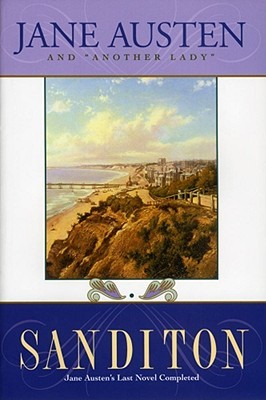
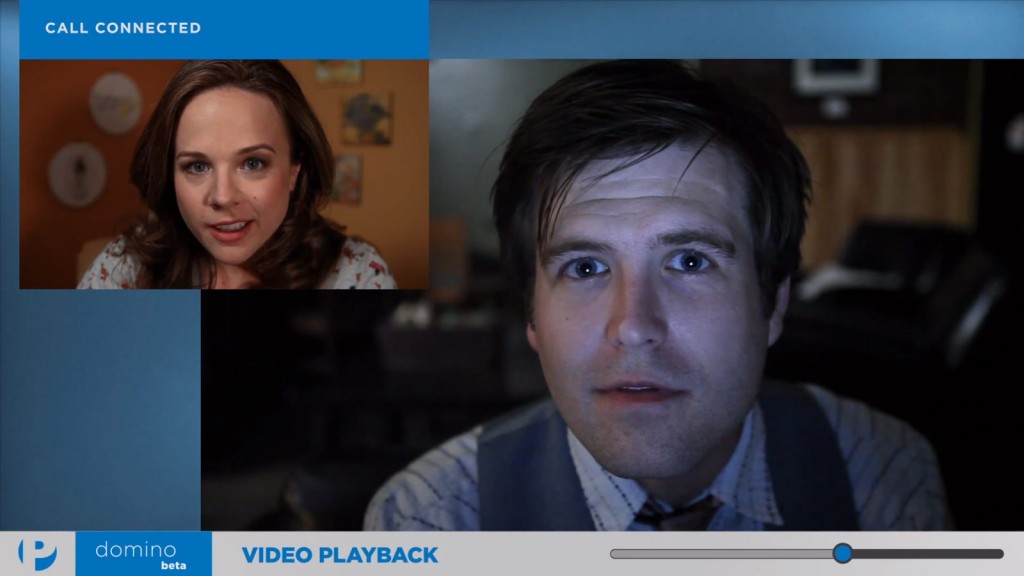
Why Sandition Was Not as Good as LBD

I loved the Lizzie Bennet Diaries.  Like many of you, I sat in eager anticipation for each new episode and then watched the episode multiple times, squeeing and over-analyzing each move the characters made.  I supported the crew in the Kickstarter and was super excited when they announced they would run a miniseries of Austen's Sanditon this summer.  I hadn't read Sanditon, but I trusted the team to do as good a job with it as they did with LBD.

And then they didn't.

Don't get me wrong, I still love Pemberly Digital, I am watching Emma Approved, and Sanditon wasn't awful.  It just wasn't as good as LBD was.  And here are the two main ways where Sanditon went wrong.

1.  They chose an unknown, unfinished Austen novel as their source material.

I know that a lot of people who hadn't read Pride and Prejudice or seen the movies watched and loved LBD.  However, there is a wide cultural understanding of the general plot of Pride and Prejudice.  Even if you have never read the book or seen the movies, you know it's about guy and girl who hate each other and then fall in love.

Sanditon does not have that same cultural presence.  Because Austen died before she completed the novel, most people have not read it.  Even after seeing Welcome to Sanditon and reading the summary of the novel on Wikipedia, I still don't know what the story is about.  With LBD you knew Lizzie and Darcy would get together in the end; the question was how.  With Sanditon, I couldn't figure out what was supposed to be happening, and I'm still not entirely sure.  What was our end-goal supposed to be beyond Clara and Edward getting together?  Were we ever supposed to resolve Tom's hijacking and re-branding of the town's businesses in a false sense of progress?  Was Clara supposed to have a story arc?  She didn't change like Elizabeth, Anne, Emma, and Elinor did throughout their novels.

And what was with the the spin gym side story?  It was introduced during the last third of the series and then didn't go anywhere.  You don't introduce things that late in the game.  Or if you do, it better be important.  But it wasn't.  It created a negligible amount of romantic tension and then...nothing. 

2.  They sacrificed core content for filler content, specifically the fan videos.

Don't get me wrong, I love the community that sprung up around LBD.  I love that we swapped theories in the comments and created gifs and wrote reaction posts and experienced LBD together.  However, these fan reactions should never take prescient over the professionally written content.  I don't subscribe to see four minutes of fan videos every week.  These videos didn't move the plot along at all.  At least in LBD when we had filler episodes, we got to know the characters better.  The Sanditon fan videos, not so much.  


A better way to do "filler" episodes was Clara's ice cream videos.  Even though they didn't move the plot forward much, we got to know Clara.  

I don't know if Pemberly Digital was just trying to stretch out the series to make it last longer because Emma Approved got delayed or what, but I would have preferred a shorter, fan-video-less series.  I think the community is great and the fans are great, but we are not the central content.  The story is.

I did like Tom and Ed and Clara.  I loved the late night conversation between Clara and Ed.  I loved seeing more of Gigi and her growth as a character beyond her brother's expectations.  Pemberly Digital made some big mistakes with Sanditon, but I think they learned from those mistakes and will avoid them with Emma Approved.  I'm excited to see where this new series will go.

Thursday, October 10, 2013

Vlog Adaptations of Classics

As you can probably tell from some of my posts this spring (1, 2, 3), I love the Lizzie Bennet Diaries.  I'm a huge Austen-ite.  I've read her books and seen the movie adaptations more times than is probably healthy.  I thought I knew the story of Pride and Prejudice, but The Lizzie Bennet Diaries took the story in a whole-new-while-still-true-to-the-book direction.  The writers brought a depth to Lydia's character that I didn't know was there.  It is a fantastic adaptation that totally deserves the Emmy it won, and I'm sad that it's over.  However, while LBD may have reached an end, it has inspired a bunch of new vlog adaptations of other classic novels.  I prove my English nerdiness by freaking out every time a new episode comes up in my subscription feed, which is pretty much every day considering how many adaptations I'm following.  Today I am sharing these adaptations with you.  

The Autobiography of Jane Eyre--episodes on Wednesdays and Saturdays

This is probably my favorite adaption.  The actress is Jane.  She totally channels Jane's contemplative seriousness without being gloomy about it.  This Wednesday's episode was the best so far.  Meanwhile, Rochester is a rude, inconsiderate, jerk.  This is more a problem with the source material than the adaptation.  Rochester is supposed to be that way, but it's more problematic in a modern setting than it was in the 1800s.  So far the writers have kept him true to character without making him too easy to hate.  However, I don't see how they're going to deal with some of the issues later in the book.  

For example:  Bertha.  Today's mental health care is words better than what was available in the 1800s.  Back then, it was merciful for Rochester to keep Bertha in his attic where she would be well cared for and comfortable rather than banishing her to an asylum where she would be, at best, horribly neglected.  But modern Rochester could easily find quality care for a crazy wife.  This makes me think that Bertha's not going to be crazy, but then what will the insurmountable Bertha problem be? 

An even bigger adaptation challenge is Jane's flight from Thornfeild.  People can't disappear anymore, not in our internet-saturated world.  But she has to do so without losing viewers.  Jane can't go internet silent, because viewers would get bored and we'd miss all the St. John story and we can't miss that.  If she changed to a new channel, she'd lose the viewers who would miss the memo and Rochester could still track her down.  I can't figure out how they're going to make this work, but I can't wait to see how they do it.

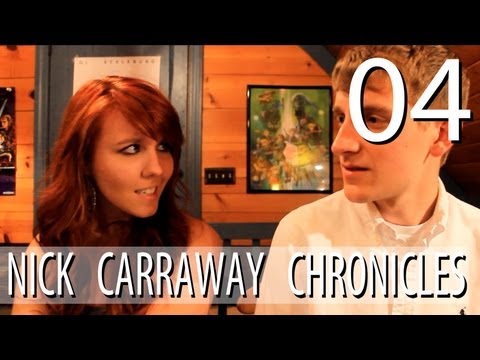
Nick Carroway Chronicles--episodes on Mondays 

I think The Great Gatsby is one of the classic novels that most naturally translates to vlog form since the book is basically Nick telling us what happens to other people.  He's a built in narrator.  Since there is only one episode per week, we're still at the very beginning of the story and have hardly seen Gatsby, but I'm liking it so far.  Also,I love Jordan.  She's hilarious.  I don't even know how to describe her.  She's not goofy, just funny.  This series deserves way more attention than it's gotten.  

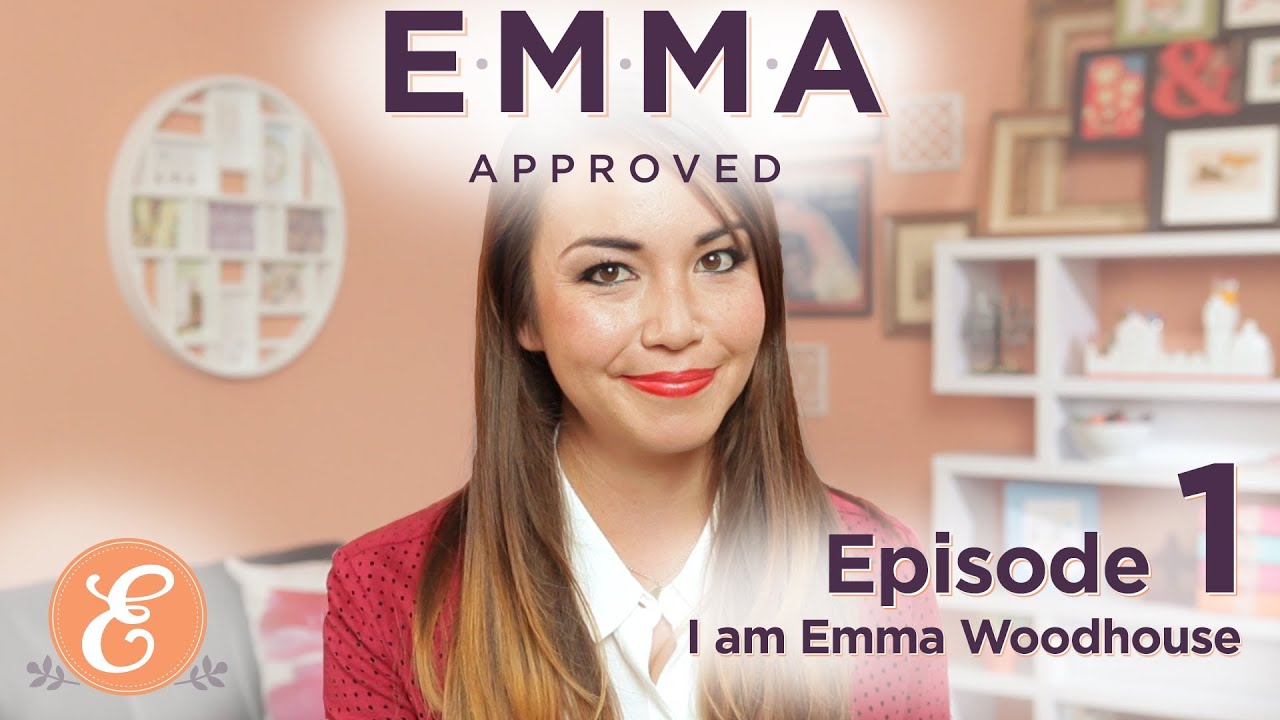
Emma Approved--episodes on Mondays and Thursdays

This series comes from the same team that made The Lizzie Bennet Diaries and Sanditon (Sanditon has its own post here).  Emma Approved just premiered on Monday, so it's way too early to judge whether this will be as good an adaptation as LBD, but so far it looks promising.  Emma's characterization is perfect.  She's confident to a fault.  She thinks she reads people better than she does.  She's self centered and falsely concerned about other people.  She's so Emma Woodhousey.  I was unduly excited about this when it premiered on Monday.  

Also, does anyone else think Alex Knightly is very Edward Denhem-like?  His voice and personality seem very similar.

The Emma Project--episodes on Tuesdays and Saturdays

I discovered this one just the other day.  It will be interesting to watch this series and Emma Approved at the same time.  They've done a good job of setting up the class distinction with the college seniority and Emma would totally be a psychology major.  I love that Robbie Martin is a farmer going to to community college; we totally get why Emma would think Harriet is above marrying someone like that as well as why Emma a jerk for thinking that.  And we've started seeing more of Emma influencing Harriet in her decisions.

However, The Emma Project doesn't have the same professional feeling that the other adaptations have.  I'm not talking about lighting and sound.  I can ignore that.  I mean that instead of coming across as Emma the character telling us about her life, it feels like an actress reciting memorized lines, so it doesn't feel as real.  They also seem to be rushing through the story rather than taking time to establish the characters.  I'm still interested in it, but it's not the best adaptation I've found.

Notes by Christine--episodes on Tuesdays and Fridays

I found Notes by Christine just today.  I like it so far, but I haven't had time to see how well I like it.  They're taking a risk by having episodes that are just Christine singing opera music.  It's true to character and the story of Phantom of the Opera (book not musical), but it doesn't move the plot forward at all.  So it'll be interesting to see whether or not Youtube audiences latch onto it.  Also, the opera ghost has his own channel where he, without showing his face, offers Christine private lessons.  So that's creepy.  It'll be interesting to see where they take this story.  They could really play up the creepy stalker aspect by making him an internet predator.  We'll see. 

Anyways, go check out these series for yourself and let me know what you think.    Also, are there more vlog adaptations of classic novels out there that I missed?  I must find them all!  

Monday, September 30, 2013

Review: William Shakespeare's Star Wars by Ian Doescher

William Shakespeare's Star Wars by Ian Doescher
July 2013 by Quirk Books
176 pages--Goodreads

Inspired by one of the greatest creative minds in the English language-and William Shakespeare-here is an officially licensed retelling of George Lucas's epic Star Wars in the style of the immortal Bard of Avon. The saga of a wise (Jedi) knight and an evil (Sith) lord, of a beautiful princess held captive and a young hero coming of age, Star Wars abounds with all the valor and villainy of Shakespeare’s greatest plays. ’Tis a tale told by fretful droids, full of faithful Wookiees and fearstome Stormtroopers, signifying...pretty much everything.

Reimagined in glorious iambic pentameter—and complete with twenty gorgeous Elizabethan illustrations--William Shakespeare’s Star Wars will astound and edify Rebels and Imperials alike. Zounds! This is the book you’re looking for.


To like this book, you need to be both a Shakespeare nerd and a Star Wars geek.  Being a fan of both, William Shakespeare's Star Wars was hilarious.  Doescher does an excellent job of re-scripting the story in Elizabethan English in a humorous rather than stuffy way.  The asides and soliloquies are great and the iambic pentameter never feels forced.  Doescher also weaves in quotes from Shakespeare here and there, my favorite being when Luke starts reciting the Saint Crispin's Day speech to inspire the rebels.

The action sequences are a bit boring to read since the Chorus just gives us a play by play, but there's no other way to make that work in the context of a play.  Shakespeare didn't give stage directions, so we need a character of the Chorus to say what happens.

William Shakespeare's Star Wars is a goofy sounding combination that hits the mark.  It's a loving parody of both source materials.  I'm looking forward to The Empire Striketh Back.

Sunday, September 1, 2013

Review: Okay for Now

Okay for Now--Gary D. Schmidt
August 2011 by Clarion Books
360 pages--Goodreads

As a fourteen-year-old who just moved to a new town, with no friends and a louse for an older brother, Doug Swieteck has all the stats stacked against him. So begins a coming-of-age masterwork full of equal parts comedy and tragedy from Newbery Honor winner Gary D. Schmidt. 

As Doug struggles to be more than the "skinny thug" that his teachers and the police think him to be, he finds an unlikely ally in Lil Spicer--a fiery young lady who "smelled like daisies would smell if they were growing in a big field under a clearing sky after a rain." In Lil, Doug finds the strength to endure an abusive father, the suspicions of a whole town, and the return of his oldest brother, forever scarred, from Vietnam. Together, they find a safe haven in the local library, inspiration in learning about the plates of John James Audubon's birds, and a hilarious adventure on a Broadway stage. 

In this stunning novel, Schmidt expertly weaves multiple themes of loss and recovery in a story teeming with distinctive, unusual characters and invaluable lessons about love, creativity, and survival.


It's rare that a book can make me cry and laugh on the same page.  I can't tell you how many times I gasped aloud or giggled or teared up (which was bad because I was driving and listening to the audiobook) while reading the book.  And there were actual tears coming down my face as I finished the book.  I put off lesson planning, I put off sleep just so I could finish this book.  It is beautiful.  Just as The Wednesday Wars ties in Shakespeare plays to Holling's life, Okay for Now weaves Audobon's bird paintings into Doug's.  The noble pelican, the terrified eye, the mother bird looking into the distance.  

As a character, Doug is real.  Doug's reactions are genuine, even annoying when he lashes out like a jerk or a thug.  That's how Doug would react.  He has parts of his father in him, mostly sayings and phrases that he has internalized.  Even if he breaks the cycle of abuse, he is still partly his father.  All the other characters are multidimensional too.  Schmidt humanizes almost every single one of them.  Even the bully brother and the bully gym teacher became real people with both light and dark inside them.

The abuse was handled, well, I can't say beautifully because it is not a beautiful thing, but artfully maybe.  It is never stated directly that Doug's father is abusive, is alcoholic, beats his family.  Everything is implied.  And I loved that.  When it happens in real life, abuse is never talked about, even though everyone knows.  Schmidt conveys that through his writing style.  

The title fits the book perfectly.  Will things get better for Doug?  Maybe not.  Maybe they will get much worse.  But for now he is okay.

Part adorkable (the puffins!), part heartbreaking, Okay for Now is a beautiful book that I will definitely come back to again.  Congratulations, Mr. Schmidt.  You have been added to my "I will read anything you publish" list.

Tuesday, July 23, 2013

Review: Dodger by Terry Pratchett

Dodger--Terry Pratchett
September 2012 by Harper Collins
360 pages--Goodreads

A storm. Rain-lashed city streets. A flash of lightning. A scruffy lad sees a girl leap desperately from a horse-drawn carriage in a vain attempt to escape her captors. Can the lad stand by and let her be caught again? Of course not, because he's...Dodger.

Seventeen-year-old Dodger may be a street urchin, but he gleans a living from London's sewers, and he knows a jewel when he sees one. He's not about to let anything happen to the unknown girl--not even if her fate impacts some of the most powerful people in England.

From Dodger's encounter with the mad barber Sweeney Todd to his meetings with the great writer Charles Dickens and the calculating politician Benjamin Disraeli, history and fantasy intertwine in a breathtaking account of adventure and mystery.


This book is a lot of fun.  Dodger is a hilarious swindler who would take offense at being called a thief; he just finds things that have been misplaced, or would have been misplaced soon anyways.  But he's good-hearted and skilled at what he does.

I love Terry Pratchett's style of narration.  Something about the straight-faced, understated, tongue in cheek humor just captivated me from the very beginning of the novel.  Maybe it's the word play, things like Dodger learning how to be a successful urchin by learning how to urch or a man giving Dodger a cursory glance with a good deal of curse in it.  It's not a style that works for everyone, but it works perfectly for me.  It's just funny.  I loved each time Mr. Dickens stole a title or line for his future books from Dodger.

Dodger is historical fiction in the same way that Leviathan is historical fiction.  Pratchett calls it historical fantasy.  Is it entirely plausible that all this stuff in this book (multiple assassination attempts, several heroics, being raised from rags to riches, etc) happens in just week?  No. But who cares?  This is the sort of book that throws plausibility out the window and says "wouldn't it be cool if.." Pratchett fudges dates and places to make it work out so all his historical figures can come together.  If you can accept that, the book is fun.  Otherwise, the craziness will bug you.  

My only question is why didn't we get more of the Outlander?  That was a serious let down.  It could have been so cool to have a *SPOILER* lady assassin after Dodger for most of the book.  Instead, Pratchett doesn't build up nearly enough tension and throws the Outlander in at the very tail end of the book with no explanation or development.  Most of the villains are like that too, more boogy men than fleshed out threats.

I will definitely have to give some of Pratchett's other books a try.  I really liked Dodger, but it's a book I'd hesitate to recommend.  I can't even pin down exactly what it was that made me like it, so I don't know what to identify in other readers that would make them like it.  It's an interesting read.

Saturday, July 13, 2013

Review: For Darkness Shows the Stars by Diana Peterfreund

For Darkness Shows the Stars--Diana Peterfreund
June 2012 Balzer + Bray
402 pages--Goodreads

It's been several generations since a genetic experiment gone wrong caused the Reduction, decimating humanity and giving rise to a Luddite nobility who outlawed most technology.

Elliot North has always known her place in this world. Four years ago Elliot refused to run away with her childhood sweetheart, the servant Kai, choosing duty to her family's estate over love. Since then the world has changed: a new class of Post-Reductionists is jumpstarting the wheel of progress, and Elliot's estate is foundering, forcing her to rent land to the mysterious Cloud Fleet, a group of shipbuilders that includes renowned explorer Captain Malakai Wentforth--an almost unrecognizable Kai. And while Elliot wonders if this could be their second chance, Kai seems determined to show Elliot exactly what she gave up when she let him go.

But Elliot soon discovers her old friend carries a secret--one that could change their society . . . or bring it to its knees. And again, she's faced with a choice: cling to what she's been raised to believe, or cast her lot with the only boy she's ever loved, even if she's lost him forever.


Inspired by Jane Austen's Persuasion, For Darkness Shows the Stars is a breathtaking romance about opening your mind to the future and your heart to the one person you know can break it.


For Darkness Shows the Stars does a good job of both drawing on Persuasion while also standing as its own story.  The problem was I wouldn't let it be it's own story.  I could not stop comparing For Darkness to Persuasion and finding all the places it fell short.  I just couldn't let things go, and that kept me from enjoying the book as much as I could have.


The romance was neither tense nor tragic.  Seriously, Elliot.  Kai left when you were 14.  I had four concurrent crushes when I was 14 and none of those ever came close to panning out.  Move on.  I do like that Peterfreund built up their relationship as close childhood friends.  Then as adults Elliot and Kai talk to each other all the time, killing all the tension that is supposed to be there.  Anne and Wentworth never know what the other is thinking.  That's what makes the letter so satisfying: they finally, FINALLY express what we've been hoping they felt this whole time.  That tension just isn't there in For Darkness, even with Elliot and Kai's melodramatic fights.  

The letter itself was a disappointment   Nothing will ever be as swoon-worthy as Austen's original, and since Peterfreund hadn't been using Austenesque language, it would have been out of place to cut and paste it in.  But the rewritten letter is just so bland in comparison.  It honestly felt like a Sparknotes version of the original, and it was so much less than what I knew it could be.

I am impressed with how well Peterfreund translated Regency England's social structure to her post-apocalyptic world.  The classes are broken out just as rigidly and unsurmountably.  The Posts (rising middle class) are the new unknown middle ground threat.  The Reduced are just how the aristocracy and gentry would have viewed the peasant class, people who need to be watched over because they're not capable of caring for themselves.  Peterfreund also does an excellent job of making it clear why Elliot had to stay.  We can get a bit over-romantic while reading Persuasion and become convinced that Anne and Wentworth could have been happy as we overlook the fact that a war had just begun and he had no prospects and could have very easily died and left Anne a penniless widow cut off forever from her family.  It was the right choice for her to stay.  With Elliot we realize it would have been selfish of her to leave.  Had she left, the estate would have fallen apart from ill management and hundreds of people would have suffered.  

Peterfreund took a huge risk in reworking such beloved source material as Austen's Persuasion, and that risk didn't quite pan out for me, which is partly my own fault.  By the end of the novel I had finally allowed For Darkness to be its own novel and started to enjoy it more.  For Darkness Shows the Stars is not Persuasion by any measure, but it is good.  

Side note:  There was far too little of the Crofts/Innovations.  The Crofts are my absolute favorite Austen couple ever.  We see less of them in the movies, but in the books they are adorable.  The Innovations hardly spend two scenes together.  We see a lot of Felicia, and that's good, but I missed the Sophie going along with the Admiral's crazy driving and always sailing with him and the Admiral talking about how much he loved his wife, how he is used to having a woman (his wife) on his arm, and asking why all women can't be named Sophie. 

Sigh.  I should just go and reread Persuasion.

Monday, May 13, 2013

Review: Austenland by Shannon Hale

Austenland--Shannon Hale
May 2007 by Bloomsbury
197 pages--Goodreads

Jane Hayes is a seemingly normal young New Yorker, but she has a secret. Her obsession with Mr. Darcy, as played by Colin Firth in the BBC adaptation of Pride and Prejudice, is ruining her love life: no real man can compare. But when a wealthy relative bequeaths her a trip to an English resort catering to Austen-crazed women, Jane's fantasies of meeting the perfect Regency-era gentleman suddenly become realer than she ever could have imagined. 

Decked out in empire-waist gowns, Jane struggles to master Regency etiquette and flirts with gardeners and gentlemen;or maybe even, she suspects, with the actors who are playing them. It's all a game, Jane knows. And yet the longer she stays, the more her insecurities seem to fall away, and the more she wonders: Is she about to kick the Austen obsession for good, or could all her dreams actually culminate in a Mr. Darcy of her own?


I usually don't care much for adult books.  Maybe I'm still a kid at heart.  Maybe you can just do more interesting things in whimsical middle grade/young adult books than reasonable adult books.  Maybe I just don't care about a mid-thirties woman whose life isn't going anywhere.  For whatever reason, I couldn't lose myself to Austenland.

My biggest hang up with this novel is the premise.  As fun as Austenland is as an idea and as much as I liked exploring the world, immersing yourself in Austen is not the way to get over an Austen fetish.  You wouldn't send an alcoholic on a bunch of winery/brewery tours to kick the habit.  It just won't work.  In the same light, deliberately putting yourself in a position to fall for a Mr. Darcy won't kill your Darcy obsession. I hoped for more from Jane: that she would learn to embrace reality and make it her own. Instead she is rewarded with the idyllic rom-com ending.  I'm not a cynic, but come on.  Darcy is not real, and you will waste your life if you wait for him.  

I love the narrator and her personality.  Hale perfectly captures the gently satirical tone of Austen's narrators and their commentary.  I would have liked to see more of her.  I also like when Hale's plot is reminiscent of Austen's novels.  It is often just close enough to realize "Hey, this is Mansfield Park," but not so similar that Hale's plot loses originality.

Austenland is a light, fluffy book, but that is all it was meant to be.  Austenland is written to fulfill that romantic fantasy in all our Austenite hearts.  The romance just isn't to my taste.  I mean, describing men as "yummy"?  No.  So on the whole, not my favorite Hale novel, but still a fun read.

Wednesday, April 17, 2013

Mini Review: Eyes Like Stars by Lisa Mantchev

Eyes Like Stars--Lisa Mantchev
July 2009 by Feiwel and Friends
352 pages--Goodreads

All her world’s a stage.

Bertie Shakespeare Smith is not an actress, yet she lives in a theater.  She’s not an orphan, but she has no parents.  She knows every part, but she has no lines of her own.  That is, until now.


Welcome to the Théâtre Illuminata, where the actors of every play ever written can be found behind the curtain. They were born to play their parts, and are bound to the Théâtre by The Book—an ancient and magical tome of scripts. Bertie is not one of them, but they are her family—and she is about to lose them all and the only home she has ever known.


I don't have much to say about this book.  I actually liked the premise a lot more than the actual book because the STUPID love triangle got in the way of including an actual plot.  We've got the manipulating bad boy, Ariel, who we know we can't trust but Bertie is inexplicably drawn to him and the nice guy Nathan, who would be just fine as a friend, but he's turned into a romantic interest to create tension and then nothing actually happens.  It was all completely contrived and unsatisfying because it crowded out an actual plot.  What little plot manages to squeeze in is jumbled, disjointed.

I did get a kick out of the allusions to Shakespeare's plays.

Theater buffs may like it, but I didn't care much for it, even though the cover is gorgeous.

Saturday, October 13, 2012

Review: Summer Reading is Killing Me! by Jon Scieszka

Summer Reading is Killing Me!--Jon Scieszka
1998 by Puffin
80 pages--Goodreads

Okay, this is just going to be a mini review.  Short book will usually equal short review.  I normally include the synopsis/jacket flap/back of the book blurb from Goodreads, but Goodreads didn't have a good blurb for this book. So, here's my own attempt:

Joe, Sam, and Fred get sucked into their summer reading list.  The characters from Peter Rabbit, Treasure Island, Frog and Toad, Charlotte's Web, The Twits, and other children's classics get all mixed up, with the villains, of course, conspiring to take over the stories.  (I actually want to read the villian dominated stories:  Frankenstein in Wonderland, The Devil in the Willows, Green Eggs and Dracula, etc.)  The boys must set all the stories straight and somehow make it back home before getting eaten by an octopus, crushed by an enormous stack of library books, or bored out of their minds by the girly series.

Really, anything by Scieszka is going to be funny.  The book both pokes fun at and pays tribute to summer reading and children's literature.  I love how the characters from the different stories interact; metafiction is just fun.  The summer reading list at the back is a great idea, giving kids who loved the story an idea of where to look next for a good read.

Other reviewers commented on the excellent illustrations, but I read this in an anthology of children's literature that, crime to humanity that it is, did not include the illustrations.  I imagine they would have been fun.  Lane Smith + Jon Scieszka = funny.

It's short and sweet and fun.  Librarians, teachers, and anyone who read a lot as a kid would get a kick out of this.  I haven't read any of the other Time Warp Trio books, so I don't know for sure how this one compares, but I'd probably introduce young readers to the beginning of the series before having them read this one.  While this book is a lot of fun, its humor relies mostly on literary references that they might not catch.

A short read you can kick out in less than an hour and a lot of fun.  Nothing spectacular, just fun.

LinkWithin

Related Posts Plugin for WordPress, Blogger...